
Every year on 29 October we mark World Stroke Day, and the reason is simple: with a stroke, minutes matter. The faster the first signs are recognised and emergency services are called, the greater the chance of saving the brain, speech, mobility — and vision. According to the World Health Organization, stroke is the third leading cause of death and disability in the world, and it is estimated that one in four adults will have a stroke in their lifetime. The good news is that most of the risk can be reduced, and anyone can learn to recognise the signs.
What happens during a stroke?
A stroke occurs when the blood supply to part of the brain is cut off – most often because a clot blocks a blood vessel, less often because of bleeding. Brain cells deprived of oxygen die very quickly, which is why we say “time is brain”. Treatment that dissolves or removes the clot is effective only if given within the first hours after symptoms begin.
BE FAST: six letters that can save a life
To remember the signs more easily, use the acronym BE FAST, also recommended by the US Centers for Disease Control and Prevention (CDC). Symptoms usually come on suddenly:
- B – balance: sudden dizziness, unsteady walking or loss of coordination,
- E – eyes: sudden loss or blurring of vision in one or both eyes, loss of part of the visual field or double vision,
- F – face: ask the person to smile – does one corner of the mouth droop?
- A – arms: ask them to raise both arms – does one drift downward?
- S – speech: is their speech slurred or difficult, or do they not understand what you are saying?
- T – time: call emergency services immediately on 194 or 112 and note when the symptoms started.
In addition, a sudden, unusually severe headache without a clear cause can also be a warning sign.
When the eye is the first messenger
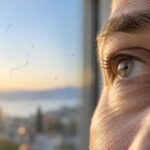
Many people don’t know that a stroke is sometimes first “seen”. The visual pathways run through a large part of the brain, so damage can cause loss of the left or right half of the visual field in both eyes (homonymous hemianopia), even though the eyes themselves are healthy. People often describe it as “not seeing one side”: they bump into door frames or furniture, skip the beginning of lines when reading, or don’t notice objects on one side. Patient experiences collected by the University of Oxford show how easily such changes are mistaken for tiredness, migraine or “weaker eyes”.
It is also important to know about the transient ischaemic attack (TIA), the so-called “mini-stroke”. Symptoms may last only a few minutes – for example, brief loss of vision in one eye – and disappear completely. Even so, it is a serious warning that needs immediate medical assessment.
How to reduce the risk?
Most of the burden of stroke is linked to factors we can influence. A few steps that make a difference:
- measure your blood pressure regularly – high blood pressure almost triples the risk,
- don’t smoke and avoid tobacco smoke,
- keep your blood sugar and blood fats under control,
- eat less salt and more vegetables, fruit and whole grains,
- be active every day and maintain a healthy body weight,
- limit alcohol.
The eye can also reveal something about the blood vessels: imaging of the back of the eye shows changes linked to high blood pressure or blood sugar, which are also risk factors for stroke. This imaging is part of our Premium Plus eye examination.
When to see a neurologist?
If symptoms are happening now, don’t call the clinic or wait – call 194 or 112 immediately and don’t drive yourself. Do see a neurologist after temporary symptoms that went away on their own, after a stroke for monitoring and secondary prevention, and if you have frequent dizziness, numbness, headaches or several risk factors and want an assessment. At Poliklinika Pavan you can have a neurological examination in the same place where you have your eyes checked.
Conclusion
Learn BE FAST and share it with your family – especially older relatives. Recognising a sign and reacting immediately is the best thing we can do for one another. For a neurological or eye examination, call us at 047 655 999 or contact us via our contact page.
Sources: WHO – Stroke (fact sheet); CDC – Signs and Symptoms of Stroke; University of Oxford, HEXI – Changes to vision after a stroke.
Cover photo: Nic / photo-nic.co.uk, Wikimedia Commons (CC0).