

October is Contact Lens Safety Month – a good moment to remind ourselves of the small habits that make a big difference. Contact lenses are comfortable and practical, and for many people they mean freedom from glasses in sport, at work and in everyday life. Still, they are a medical device that touches the surface of the eye directly. With proper hygiene lenses are very safe, and most problems arise from small slips that are easy to avoid. And as Halloween approaches, decorative lenses that change the colour or look of the eye deserve special attention.
Why is lens hygiene so important?
A lens on the eye creates a thin space between itself and the cornea, the eye’s clear “window”. If there are microorganisms on the lens or in the lens case, they can reach the cornea and cause inflammation (keratitis). Such infections usually respond well to treatment if detected in time, but in rare cases they can leave a scar that permanently reduces visual acuity.
Risky habits are more common than we think. In a study by the US Centers for Disease Control and Prevention (CDC) almost all lens wearers surveyed (about 99%) admitted to at least one habit linked to a higher risk of infection. Half had slept in their lenses at least once, more than half had topped up old solution with fresh solution, and almost a third had had a red or painful eye that required a visit to the doctor.
Everyday habits that protect your eyes
The good news is that the risk can be greatly reduced with simple rules, also recommended by the CDC:
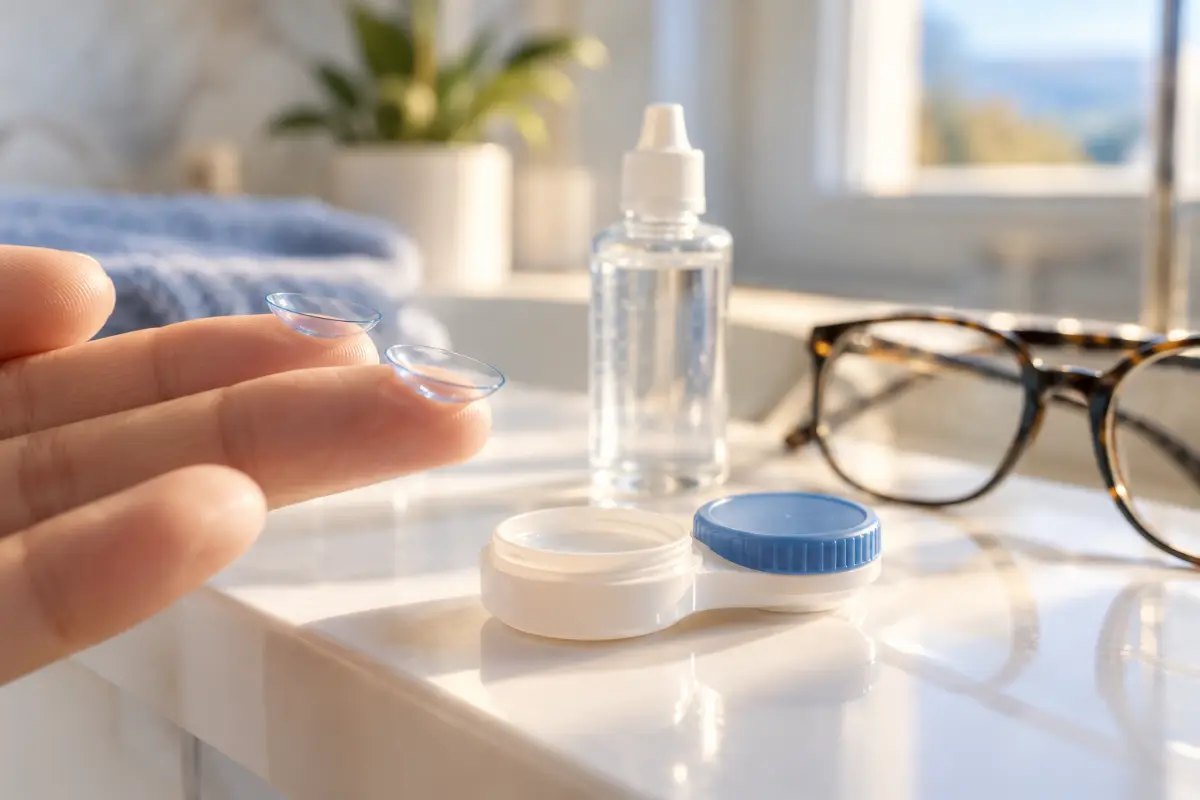
- Hands first: before inserting or removing lenses, wash your hands with soap and water and dry them well with a clean towel.
- Always fresh solution: don’t top up old solution with new, and don’t use solution past its expiry date.
- No tap water: never rinse lenses or the case with water or saliva – only with the solution recommended by a professional.
- The case matters just as much: after use, rinse it with solution, leave it open to dry and replace it at least every three months.
- Don’t sleep in your lenses unless your doctor has expressly approved it, and stick to the recommended replacement schedule (daily, two-weekly, monthly).
- Keep a spare pair of glasses with an up-to-date prescription, so you can remove your lenses as soon as you feel discomfort.
Water, pools and showers: a hidden risk
Water from the tap, the sea, lakes or pools is not sterile. It can contain microorganisms such as amoebae of the genus Acanthamoeba, which ordinary chlorination does not reliably destroy. A corneal infection with this organism is rare, but it is painful and difficult to treat. That is why it is safest to remove lenses before showering, bathing and swimming. If you want to see clearly in the water, consider prescription swimming goggles.
Decorative lenses for Halloween: not just a fashion accessory
Lenses that give the eye a cat-like, red or completely white look can complete a costume, but they too are a medical product, even when they have no prescription. The American Academy of Ophthalmology warns that lenses of unknown origin, bought at fairs, in costume shops or online without an examination, may have a rough surface or an unsuitable shape. Such a lens can damage the cornea and open the way to infection.
If you want decorative lenses, choose verified products from an optician and have a professional check your eyes and determine the right lens size beforehand. Never lend them or share them with friends. You can also get advice on choosing and using lenses correctly at our Optika Paloma.
When to see an ophthalmologist?
If you wear lenses and notice any of the following signs, remove your lenses and don’t put them back in until a doctor has examined you:
- redness of the eye that doesn’t go away after removing the lens,
- pain, stinging or a foreign-body sensation,
- increased sensitivity to light,
- blurred vision or increased watering,
- increased discharge or swelling of the eyelid.
With such symptoms it is important not to delay an examination and to tell the doctor that you wear lenses. Bring both the lenses and the case, as they can help find the cause. Even when you have no symptoms, lens wearers are advised to have regular check-ups – specialist eye examination will check the condition of the cornea, the tear film and whether your eye tolerates lenses well.
Conclusion
Contact lenses can be a safe and comfortable part of everyday life, with clean hands, fresh solution, no water and no sleeping in lenses. If you are unsure which lenses are right for you, notice discomfort or are planning decorative lenses for Halloween, we will be happy to examine and advise you. You can book an appointment at 047 655 999 or via contact page. Your Poliklinika Pavan.
Sources: CDC – MMWR, Contact Lens Wearer Demographics and Risk Behaviors (2015); CDC – Healthy Contact Lens Wear; American Academy of Ophthalmology – warning about decorative lenses; Prevent Blindness – Contact Lens Safety Month; HealthyWA – Acanthamoeba and contact lens use