
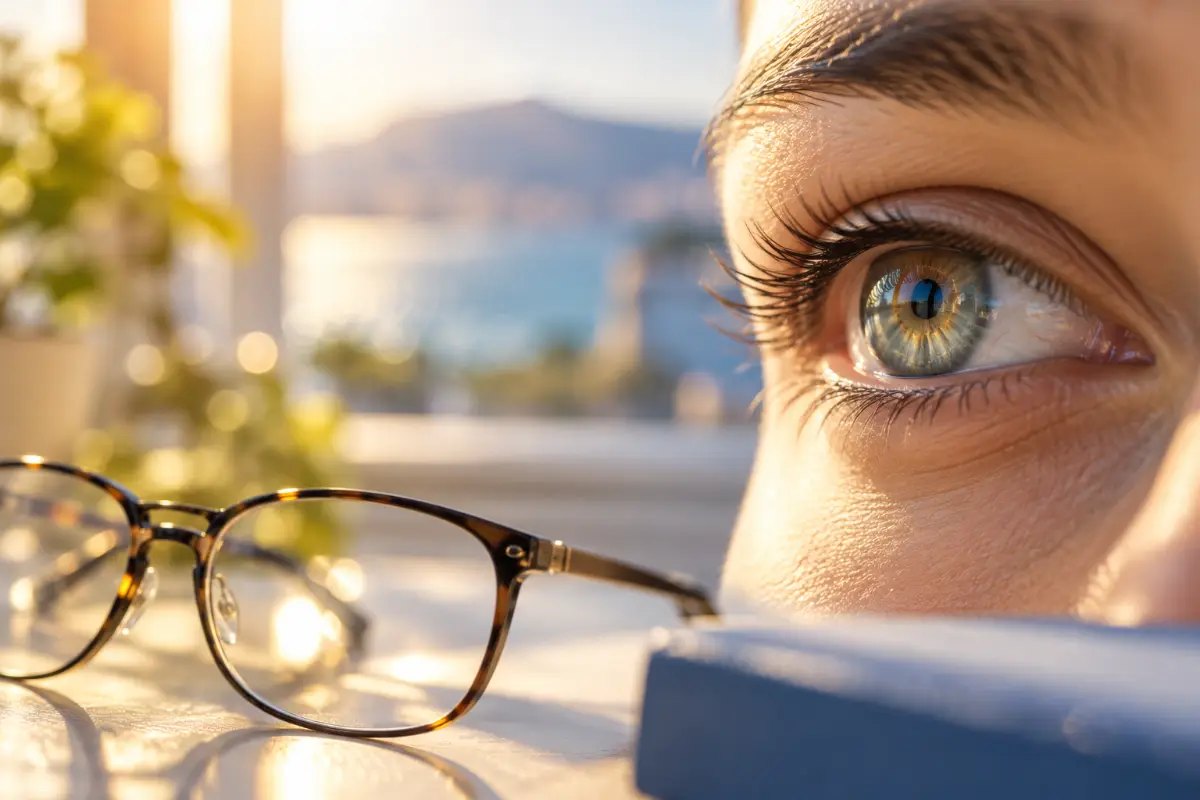
Today, 8 October, is World Sight Day. This year the International Agency for the Prevention of Blindness (IAPB) is marking it under the slogan #LoveYourEyes – Volite svoje oči and invites everyone to look after their eyesight and have regular examinations. We take our vision for granted until something changes, and many eye diseases develop for a long time without any symptoms. That is why this day is a good occasion to ask yourself when you last had an eye examination.
How big is the problem?
According to the World Health Organization, at least 2.2 billion people worldwide have near or distance vision impairment. In at least a billion of them the impairment could have been prevented or can still be treated. The most common causes are uncorrected refractive error and cataract – conditions that today are successfully treated with glasses, lenses or a short procedure.
Another group of diseases is more insidious. Glaucoma, diabetic retinal disease and macular degeneration usually don’t hurt at first and don’t noticeably change vision. By the time the patient notices a change, part of the damage is often already permanent. That is exactly why a regular examination is the best protection.
How often should you have an examination?
The American Academy of Ophthalmology (AAO) gives clear guidelines for adults without known eye disease or risk factors:
- Around age 40 – a baseline, complete eye examination, even if you have no symptoms.
- From 40 to 54 – every 2 to 4 years.
- From 55 to 64 – every 1 to 3 years.
- After 65 – every 1 to 2 years.
- Diabetes – a fundus examination at least once a year, regardless of age.
More frequent check-ups are needed if glaucoma runs in your family, if you have a high prescription, high blood pressure or have had an eye injury. For children an examination before starting school is important, because lazy eye (amblyopia) can only be treated successfully while vision is still developing.
What is checked during the examination?
A complete eye examination is not just reading letters off a chart. Besides visual acuity and prescription, we check eye pressure, the front of the eye and the lens, and with dilating drops also the retina and optic nerve. At the specialist eye examination you get a complete picture of your eye health. Those who want an even more thorough assessment can choose the Premium Plus examination with imaging of the optic nerve and the back of the eye. The images allow even the smallest changes to be compared at the next check-up.
Small habits that protect your eyesight
- Screen breaks: every 20 minutes, look at something far away for at least 20 seconds.
- Wear sunglasses with UV protection all year round, not just in summer.
- Don’t smoke – smoking increases the risk of cataract and macular degeneration.
- Keep blood sugar and blood pressure under control – eye health is closely linked to the health of your blood vessels.
- A varied diet rich in green vegetables, fish and fruit.
- Protective glasses when working with tools and in ball or racket sports.
When to see an ophthalmologist?
Don’t wait for a regular appointment if you notice:
- a sudden drop in or blurring of vision, in one or both eyes,
- flashes, new “floaters” or a curtain-like shadow in your field of vision,
- distorted straight lines or a dark spot in the centre of your vision,
- severe eye pain, redness or sensitivity to light,
- double vision or an eye injury.
World Sight Day reminds us that good vision is something to look after, not just something we have. If several years have passed since your last examination, now is the right time. You can book an appointment at 047 655 999 or via contact page.
Sources: WHO – Blindness and vision impairment (2026) · American Academy of Ophthalmology – Frequency of ocular examinations · IAPB – World Sight Day